
Field Notes: The ferry got cancelled, so you drove
Say your island ferry is cancelled and the trip turns into a road trip halfway through. How to handle a mid-trip change of plans, and keep track of the trip you actually took.
Say you’re standing in a ferry terminal on a gray morning, bag at your feet, coffee going cold, watching the departures board flip your crossing from “Delayed” to “Cancelled.” The wind has been picking up since last night. The staff behind the counter have the calm, slightly tired look of people who have shared this news many times before.
Your plan was simple: cross to the island, spend three nights, ferry back, then catch a train to the city for the last leg. Now the first piece is gone, and everything after it is wobbling.
What happens
You have a choice. Wait at the terminal and hope for an afternoon sailing, or give up on the island and find another way to make the trip work.
Picture yourself doing the math in the terminal café. The next confirmed sailing might be tomorrow, or the day after if the weather doesn’t settle. Your first island night is already paid for, but the other two might be refundable. Across the parking lot there’s a rental car desk with a line forming, because you’re not the only one with this idea.
So you rent the car. Instead of the island, you drive the coast: a fishing town you’d never heard of, a cliff road with a view that makes you pull over, a guesthouse booked on your phone from a gas station. By the second day the trip has a completely different shape, and honestly, it’s pretty great.
On paper, though, it’s a mess. There’s a ferry ticket for a crossing that never happened, a refund request somewhere in progress, a rental agreement, two guesthouses booked on the fly, and a train ticket at the end that you still need. Your tidy itinerary has turned into a road trip with no record of where it actually went.
What you’d learn (and do differently next time)
Check the forecast and the operator’s alerts the night before. Ferries are more weather-sensitive than most flights. Many operators post service alerts on their website or social accounts before they email anyone. If the wind forecast looks rough, have a plan B in your head before you get to the terminal.
Ask about your options before you walk away from the counter. Some operators will move you to the next sailing for free, some will refund you, and some only do one or the other. Get the answer in writing, or at least screenshot the cancellation notice. You’ll want it for the refund or for travel insurance.
Move fast on the alternatives. When a crossing cancels, rental cars near the terminal disappear quickly. If you think you might drive, book the car first and cancel it later if the ferry comes back. A free cancellation costs less than a stranded afternoon.
Protect the fixed pieces at the end. The things that are hardest to change, like the train at the end of your trip or the flight home, should anchor your new plan. Work backward from them so the road trip ends where it needs to.
Call your accommodation. Small hotels on islands deal with cancelled ferries all the time. Many will move your dates or let you off a night when the crossing doesn’t run. It never hurts to ask nicely and early.
Watch the one-way fees. If you’ll drop the car somewhere other than where you picked it up, check the one-way charge before you sign. Sometimes it’s small. Sometimes it’s not.
Check your insurance and your card. Some travel insurance policies and credit cards cover extra costs from a cancelled crossing, like the rental car or a lost hotel night. Read the fine print before you pay, and keep every receipt.
Keep track of where you actually went. It’s easy to remember the trip you planned and forget the one you took. Jot down the towns, the roads, the place with the great soup. Months later, that improvised detour is often the part you’ll talk about most.
Switching modes halfway through a trip feels like the plan has failed. Most of the time it hasn’t. It has just turned into a different trip, and the only real risk is losing track of the pieces.
How you’d keep it
In Wendways, flights, trains, ferries, and road trips live in one travel record, so the crossing you booked, the coast you drove instead, and the train home can all sit in the same trip. A road trip is its own kind of plan, so it shows up as a route on your map and counts under road trips in your stats. When the plan changes shape, your record changes with it, and later you get to look back at the trip you actually took.
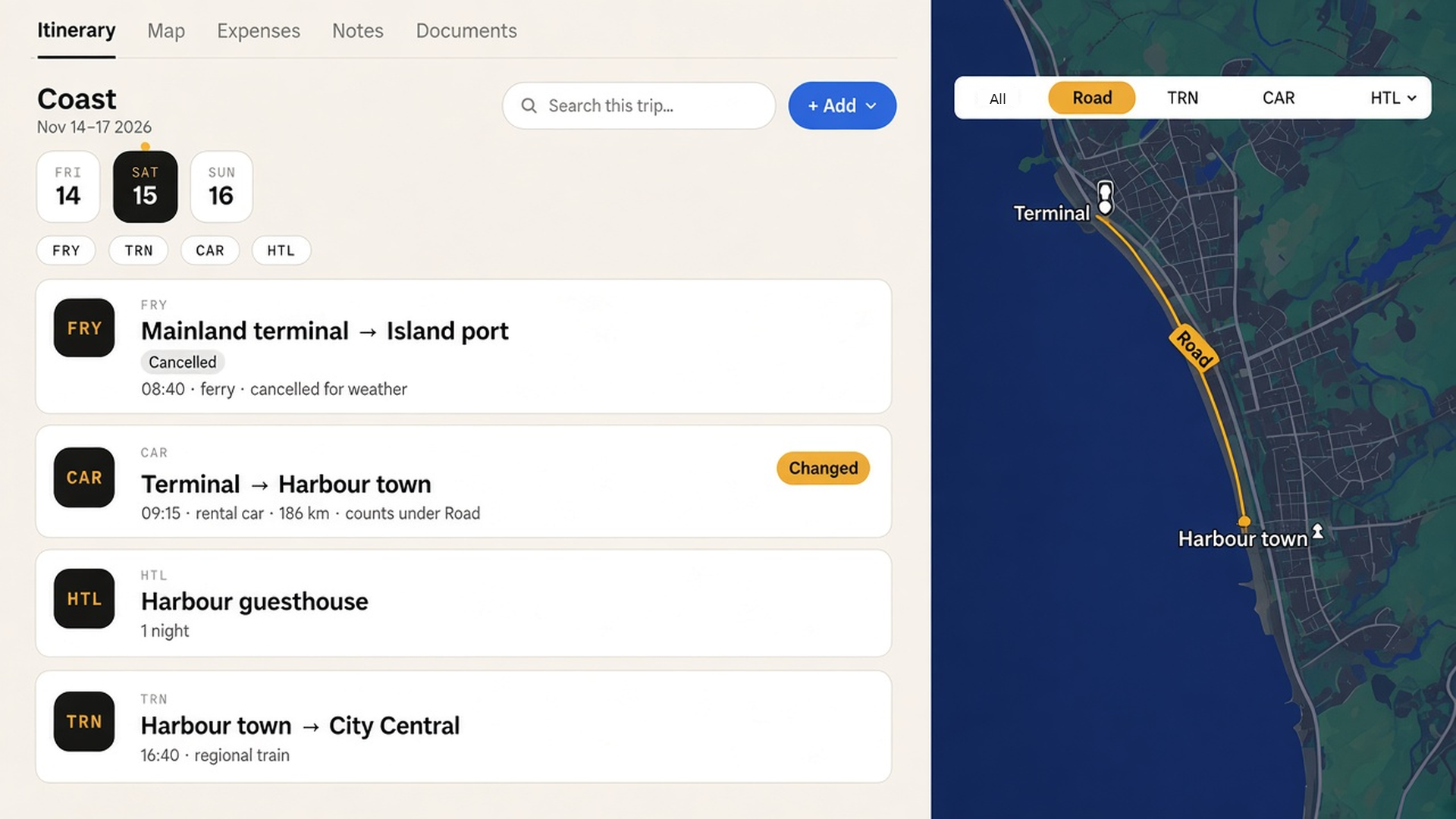
Sample trip. Cover photo by Burak Arlı on Pexels.